

Small kitchens rarely need more containers. They need better use of the space that already exists. This guide ranks storage upgrades by how much usable capacity they can unlock for the money, without pretending every organizer deserves a place in your apartment.
The quick rule
Before buying kitchen storage, ask one question: does this create usable space, or just make existing clutter look more organized? We favor products that use vertical, door, wall or dead cabinet space before products that consume new floor or counter space.
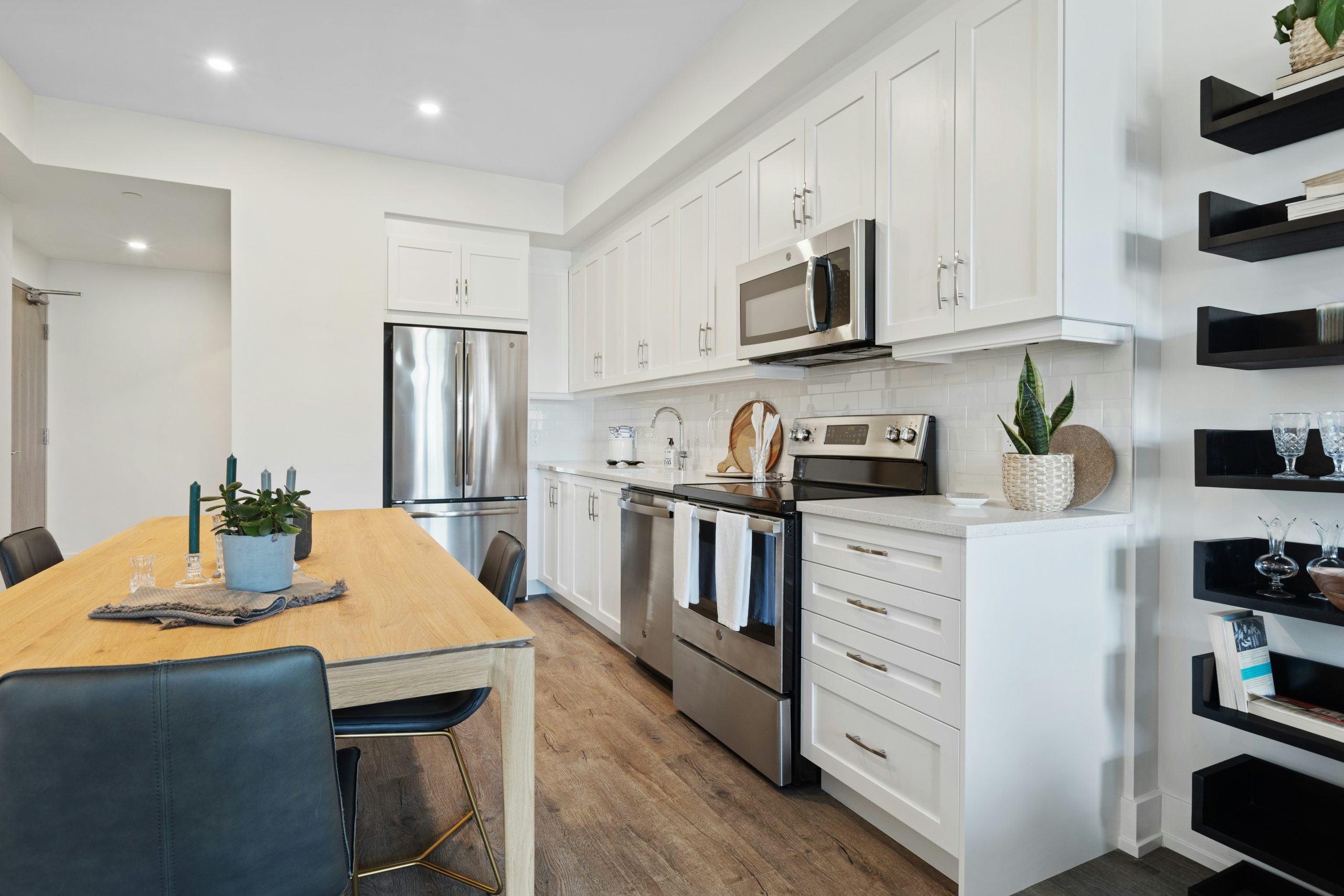
How we ranked small-kitchen storage
There is no honest universal dollar-per-square-foot number for an organizer because cabinet dimensions, product sizes and prices vary. Instead, this ranking compares types of storage using the same decision framework: storage gained, price efficiency, how much new footprint the item consumes, renter friendliness and how easily it moves to your next apartment.
The score is editorial rather than scientific, but the criteria are transparent. It is a kitchen-focused application of our Earned Space approach: products that create capacity from neglected space score higher than products that simply add another object to the room.
| Rank | Storage type | Typical budget | Score | Best use |
|---|---|---|---|---|
| 1 | Shelf risers | $10–25 | 92/100 | Plates, mugs, pantry shelves |
| 2 | Under-shelf baskets | $10–25 | 90/100 | Wraps, towels, light pantry items |
| 3 | Magnetic fridge-side rack | $20–45 | 88/100 | Spices, oils, paper towels |
| 4 | Cabinet-door organizers | $12–35 | 85/100 | Lids, wraps, cleaning supplies |
| 5 | Stackable open bins | $15–40 | 82/100 | Deep cabinets and pantry zones |
| 6 | Over-sink or tension storage | $25–60 | 79/100 | Sink tools and daily-use items |
| 7 | Narrow rolling cart | $25–60 | 75/100 | Gaps beside fridge or cabinets |
| 8 | Freestanding utility rack | $45–120 | 68/100 | Empty wall with no cabinetry |
| 9 | Countertop tiered organizer | $20–50 | 61/100 | Only when counter space is abundant |
| 10 | Decorative canister sets | $25–80 | 43/100 | Aesthetic storage, not space creation |
1. Shelf risers — 92/100
Best overall value. Shelf risers solve one of the most common small-kitchen problems: tall cabinet shelves with wasted air above short objects. Instead of stacking bowls on mugs or buying more cabinetry, a simple riser creates a second usable level.
They score especially well because they require no drilling, consume no new floor space and move easily. Measure the cabinet before buying; a riser that blocks access or forces you to remove everything to reach the back defeats the point.
2. Under-shelf baskets — 90/100
These turn the underside of a shelf into shallow storage. They work best for light, flat items: kitchen towels, foil, reusable bags or small pantry packets. The gain can feel surprisingly large because you are using space that was previously impossible to reach.
The limitation is clearance. If your shelf is already packed with tall items, the basket may steal more usable height than it creates. Think of this as a precision tool, not something every cabinet needs.
3. Magnetic fridge-side rack — 88/100
When the side of the refrigerator is exposed, a magnetic rack can create useful vertical storage without touching the walls. That is a strong renter-friendly trade: spices, oils, paper towels or frequently used tools can leave the countertop while staying within reach.
Check that your refrigerator side is magnetic before buying, and keep weight sensible. A rack that slowly slides down the appliance is not earning its space.
4. Cabinet-door organizers — 85/100
The inside of a cabinet door is prime small-space real estate. Over-door or removable adhesive organizers can hold pot lids, cutting boards, wraps or cleaning products without adding visible clutter.
This category loses a few points for rental risk. Adhesives vary, and heavy organizers can stress hinges. Prefer removable systems, test adhesives discreetly and avoid loading more weight than the door was designed to carry.
5. Stackable open bins — 82/100
Bins are useful when they create zones in deep shelves and prevent small items from disappearing at the back. Open-front or pull-out styles usually work better than sealed boxes for things you use every day because they reduce the friction of putting items away.
Do not buy a matching set before measuring. A row of beautiful containers that leaves unused gaps can be less space-efficient than the original shelf.
The measurement-first rule
Measure the width, depth and usable height of the exact space before shopping. Then buy for the gap you actually have. Small-space storage fails most often when the product is chosen first and the space is measured second.
6. Over-sink or tension storage — 79/100
Storage above the sink can reclaim a zone that normally does little besides hold air. Tension systems and freestanding over-sink racks can work well for sponges, soap, dish tools or frequently washed items.
The reason it does not rank higher is visual and functional interference: poorly sized racks can make a small sink feel cramped. Keep the system shallow and make sure it does not block faucets, cabinets or natural light.
7. Narrow rolling cart — 75/100
A slim cart makes sense when your kitchen has a genuinely dead gap beside the refrigerator, range or cabinet run. It can turn a few unused inches into mobile pantry storage.
But this is the point where storage starts consuming floor area. If the cart narrows a walkway or has to be moved every time you open an appliance, the theoretical storage gain is not worth the daily friction.
8. Freestanding utility rack — 68/100
A baker’s rack or freestanding shelving unit can add a lot of capacity, but it earns a lower score because it also asks for a meaningful slice of the room. Use one when you have an empty wall and genuinely lack cabinetry, not as a first response to disorganization.
Choose a depth that preserves circulation and favor shelves that can serve another room after you move. Portability is what keeps this category viable for renters.
9. Countertop tiered organizer — 61/100
Tiered stands can make frequently used items easier to see, but they rarely create much new capacity. In a genuinely small kitchen, the countertop is already one of your most valuable work surfaces. Giving it up for permanent storage should be a deliberate choice.
10. Decorative canister sets — 43/100
Canisters can look beautiful, but from a space-gained-per-dollar perspective they are usually weak. They often transfer food from packaging into a second container without increasing the amount your kitchen can hold, and bulky shapes can waste shelf depth.
Buy them because you enjoy the look or because airtight storage solves a specific food-storage problem—not because a matching set automatically makes a small kitchen more efficient.
What we would buy first with $50
For a typical rental kitchen, we would spend the first $50 on measurements and the highest-leverage dead zones: one or two shelf risers, an under-shelf basket where clearance allows, and either a fridge-side rack or cabinet-door solution if the layout supports it. The exact mix matters less than the principle: use existing vertical and hidden space before adding new furniture.
If you are furnishing the whole apartment rather than just the kitchen, start with our $500 vs $1,000 vs $2,000 first-apartment budget. It helps decide where kitchen storage belongs relative to everything else you need to buy.
Lease & Layout verdict
In a small kitchen, the best organizer is usually the one that disappears into unused space. Start inside cabinets, under shelves, on safe door surfaces and beside the refrigerator. Only add floor-standing storage after those zones are working hard.
Leave a Reply