
Your first apartment does not need to look finished in week one. It needs to work. This guide compares three setup budgets—$500, $1,000 and $2,000—and shows what to prioritize, what to postpone, and where spending more actually improves daily life.
What these budgets cover: one person setting up a small, unfurnished apartment with a kitchen and major appliances already installed. All amounts are in USD. Rent, deposit, utility activation, groceries, moving services and large appliances are separate. These are illustrative spending plans, not live shopping carts or national averages. They assume budget furniture, some secondhand finds and local pickup where possible. Each total includes a reserve for tax, delivery and surprises; if those costs exceed it, postpone an optional purchase.
Quick scan: what each budget is really for
$500
Function first.
Sleep, eat, shower, clean and keep a small buffer.
$1,000
Reduce friction.
Add a useful work/eating surface, better lighting and targeted storage.
$2,000
Buy selectively better.
Upgrade high-use pieces without filling every empty corner.
The rule before you buy anything
A new apartment creates a strange urge to solve every empty corner immediately. That is how people end up with a coffee table before they have decent lighting, matching storage bins before they know where clutter forms, or a huge sofa that makes the room harder to use.
The Consumer Financial Protection Bureau teaches a useful budgeting principle: separate needs from wants and cover needs first. For a small apartment, we add one more constraint—space.
The Earned Space Method
At Lease & Layout, a purchase should earn the money and square footage it takes. Our editorial score is transparent and simple:
| Earned Space factor | Weight | Question |
|---|---|---|
| Utility / frequency | 25 | How often will you actually use it? |
| Space efficiency | 20 | How much function does it deliver for its footprint? |
| Value per dollar | 20 | Does the usefulness justify the cost? |
| Moveability | 15 | Can it come with you to the next apartment? |
| Rental friendliness | 10 | Is it low-risk for walls, floors and deposit? |
| Versatility | 10 | Can it solve more than one problem? |
This is our editorial framework, not a scientific measurement. It exists to make our recommendations consistent. A beautiful object can still score poorly. A basic folding table can score extremely well if it works as a dining table, desk and extra prep surface while taking up almost no space when folded.
Quick answer: what each budget should accomplish
| Setup budget | Main goal | Do not chase yet |
|---|---|---|
| $500 | Sleep, eat, shower and clean comfortably | Finished decor and matching everything |
| $1,000 | Add useful surfaces, lighting and targeted storage | Decorating every room at once |
| $2,000 | Buy better high-use pieces and improve comfort | Filling every empty corner |
If you have $500: build a functional apartment
At $500, the goal is not a Pinterest makeover. Your money has four primary jobs: sleep, food, hygiene and cleaning. Anything left over buys basic lighting and a buffer for the thing you discover only after moving in.
| Priority | Example allocation |
|---|---|
| Sleep setup | $240 |
| Basic kitchen | $85 |
| Bathroom | $45 |
| Cleaning | $35 |
| Lighting / small utilities | $30 |
| Tax, delivery & contingency reserve | $65 |
| Total budget | $500 |
What to aim for: a basic mattress, simple frame and bedding within the sleep allowance; one pan, one pot, a knife, cutting board and a few dishes for the kitchen; towels and a shower curtain if needed; basic cleaning supplies and one useful light. A $500 setup is tight if you need everything new or paid delivery. Keep the sleep essentials first and delay furniture if local prices do not fit. If you already own a mattress or share cookware, move that allowance to your next real need.
Buy now
- Sleep setup
- Small kitchen kit
- Bathroom basics
- Cleaning basics
- Basic lighting
Wait
- Targeted storage
- Desk or dining surface
- Better lamps
- Extra seating
Skip for now
- Coffee table
- Accent chair
- Matching bins
- Decor sets
- Specialty gadgets
An empty corner costs $0. Leave it empty until you know what problem needs solving there.
If you have $1,000: make daily life easier
At $1,000, the biggest upgrade should not be more decor. It should be less friction: somewhere to work or eat, better lighting and storage aimed at the one place that is already annoying you.
| Priority | Example allocation |
|---|---|
| Sleep setup | $320 |
| Kitchen | $130 |
| Bathroom + cleaning | $110 |
| Lighting | $60 |
| Work / eating surface + basic chair | $160 |
| Targeted storage | $90 |
| Tax, delivery & contingency reserve | $130 |
| Total budget | $1,000 |
Add a surface that can do two jobs
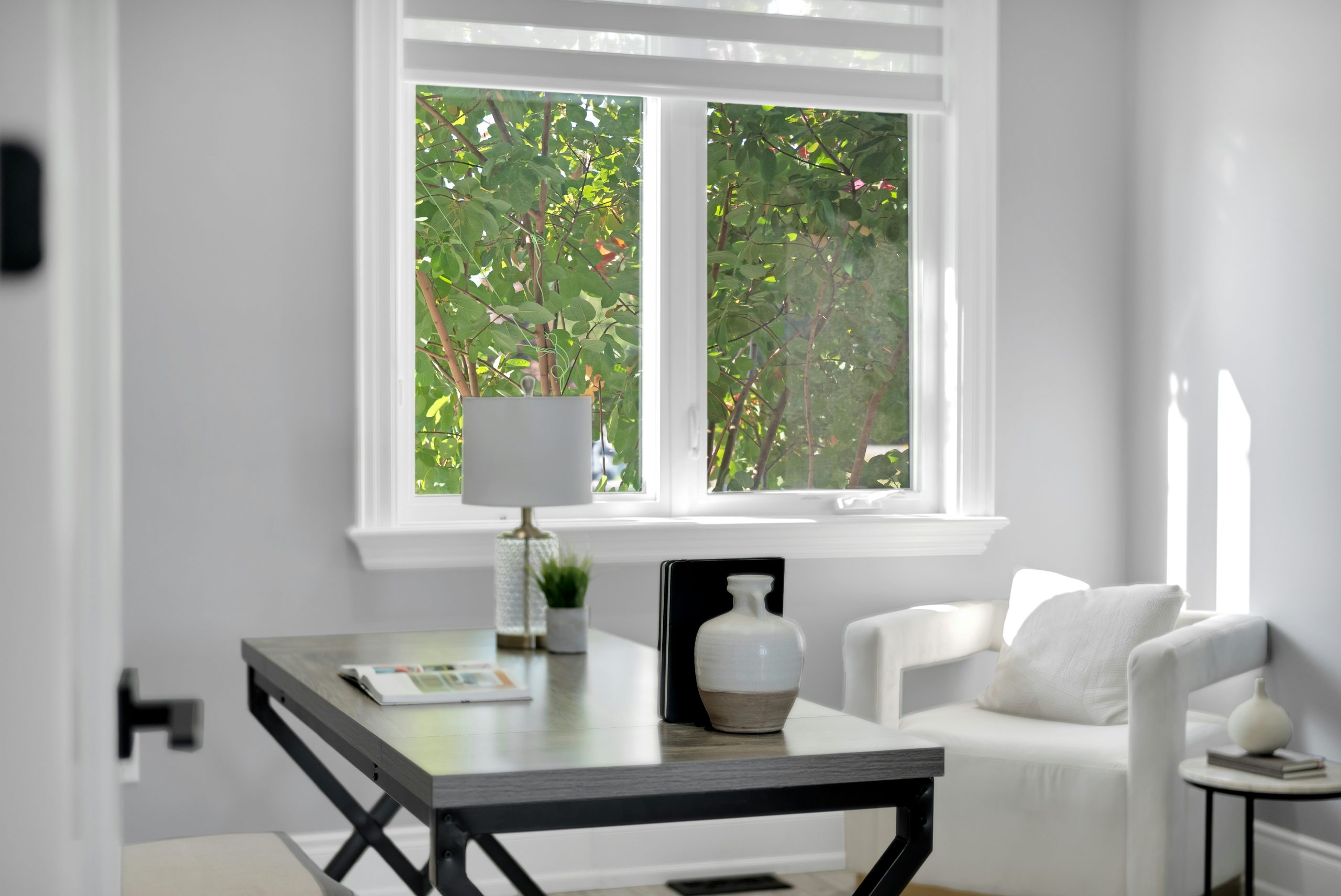
If you work or study from home, a compact table can deserve money before a sofa. It can be a dining table, desk, hobby surface and extra prep space. Current U.S. IKEA listings illustrate how broad the small-space price range is: compact folding tables can be around $50, while small two-person tables can run roughly $70–$200 before chairs. The point is not to buy a specific IKEA table; it is that useful surface area does not automatically require a huge budget or footprint.
Fix your worst storage problem—not every storage problem
Do not buy twenty bins on move-in day. Live in the apartment long enough to discover where clutter actually forms. Maybe it is shoes by the door, a kitchen with no pantry, a terrible closet, nowhere for towels or nowhere for laundry. Solve that first.
A $40 organizer that removes a daily annoyance can be a better purchase than $150 of matching containers solving imaginary problems.
If you have $2,000: buy better, not simply more
The extra $1,000 should not create twice as many objects. It should let you upgrade the pieces you touch every day and add comfort without destroying flexibility.
| Priority | Example allocation |
|---|---|
| Sleep setup | $450 |
| Kitchen | $180 |
| Bathroom + cleaning | $120 |
| Lighting | $90 |
| Table / work surface + chairs | $220 |
| Primary seating | $380 |
| Storage | $180 |
| Textiles / comfort | $130 |
| Tax, delivery & contingency reserve | $250 |
| Total budget | $2,000 |
Now a sofa can enter the conversation—but it is still not automatic
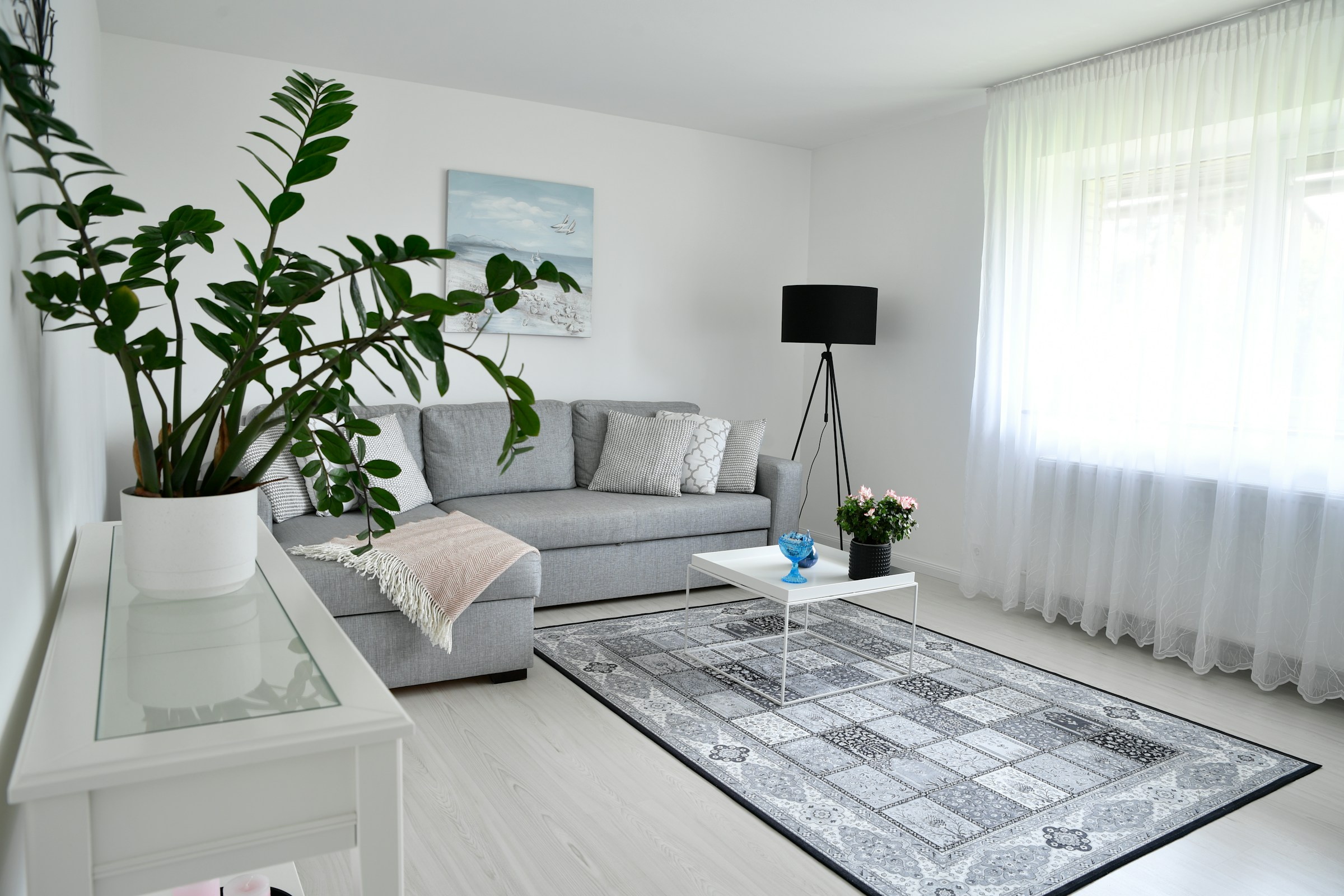
Before buying one, ask: how often will I use it, can I keep comfortable walkways around it, will it fit through the door, can I move it to the next apartment, and does it prevent the room from serving another function?
A $500 sofa that dominates a tiny room can deliver less value than a smaller chair plus a versatile table. Price is not the same thing as value.
What should you buy used?
Secondhand can stretch any of these budgets dramatically. Hard-surface pieces are often the easiest candidates to inspect and clean: dining tables, desks, dressers, bookshelves, nightstands, lamps and some storage furniture. Use more caution with upholstered and hygiene-sensitive items.
Secondhand rule of thumb
Easier to inspect: tables, desks, solid shelving, lamps, nightstands and hard-surface storage.
More caution: mattresses, upholstered seating and anything difficult to inspect or thoroughly clean.
Use the 48-hour rule
For anything that is not essential, put it on a list and wait 48 hours. For large furniture, wait a week if you can.
- What problem does this solve?
- How often will I use it?
- Where exactly will it live?
- What does it prevent me from putting there instead?
- Will I take it to my next apartment?
- Is there a smaller or multi-use alternative?
The biggest first-apartment mistake
The biggest mistake is solving problems before you have discovered them. You buy organizers before knowing where clutter forms. You buy a coffee table before realizing the room needs a workspace. You buy kitchen gadgets before learning what you actually cook there.
Your apartment will teach you what it needs. Give it a few weeks.
The 20-second version
| Budget | Your job | Best upgrade |
|---|---|---|
| $500 | Make the apartment function | Essentials + buffer |
| $1,000 | Remove daily friction | Multi-use surface + targeted storage |
| $2,000 | Improve high-use pieces | Comfort, lighting and flexible furniture |
At every budget, leave some empty space and some money unspent. You can always buy something next month. Getting rid of a bulky piece that never deserved the square footage is much harder.
Lease & Layout rule: measure first, live in it, then make every dollar and square foot count.
Choose your next purchase
Ready to turn the budget into a shortlist? Start with 15 first-apartment purchases ranked by Earned Space Score. For a small eating or work surface, compare small dining tables by floor space per seat. If clutter is your main problem, use our small-kitchen storage guide before buying more bins.
Methodology & sources
This article uses planning scenarios rather than claiming a national average furnishing cost. The budgeting logic follows the Consumer Financial Protection Bureau’s guidance on separating needs from wants and prioritizing needs first. Current small-space furniture prices were cross-checked against U.S. IKEA listings in October 2026 to make sure the ranges were plausible. Retail prices change, so compare current listings before buying.
Consumer Financial Protection Bureau: Budgeting for needs and wants
IKEA US: 2-person dining tables
Featured photo: Spacejoy / Unsplash. Interior photos: Franco Debartolo and Margo Evardson / Unsplash. Photos illustrate layout ideas; they do not depict rooms furnished for the stated budgets.
Leave a Reply